





Introduction
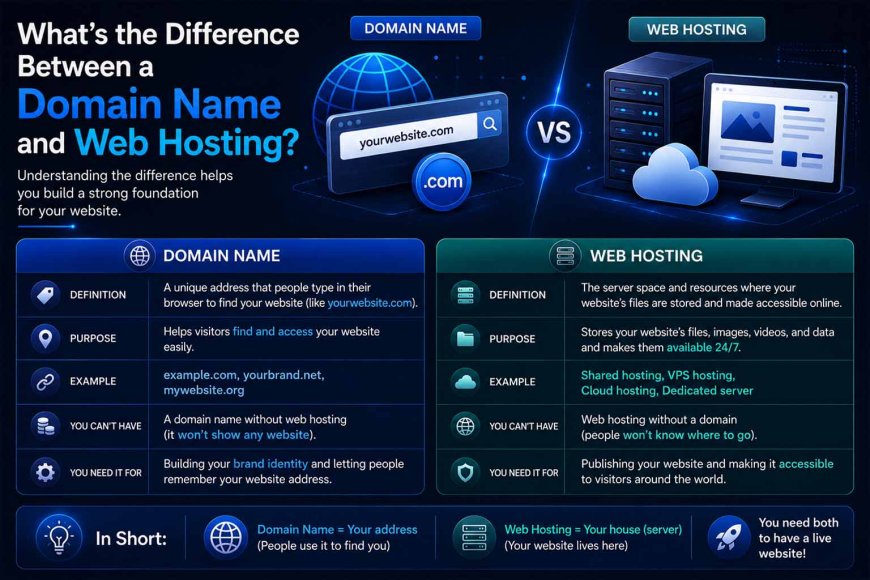
Many people confuse a domain name with web hosting because they are often purchased together. However, they are two completely different things.
A domain name is your website’s address on the internet, such as website.net or example.com. Its main purpose is to make it easy for people to find and access your website.
Web hosting, on the other hand, is the place where your website’s files and databases are stored, including images, web pages, code, articles, and other content. You can think of web hosting as the “home” where your website lives.
To understand the difference from the very beginning, imagine that you have decided to launch a unique online store—a project you have always dreamed of and carefully planned down to the smallest detail. For your store to succeed, you will need two essential things: a clear address that tells people how to find you and a suitable place where you can display your products and run your business.
This is where the fundamental difference between a domain name and web hosting becomes clear. Each plays an essential role in building a website.
The journey begins with the domain name—the name you choose for your store or website. It is the address visitors type into their browsers to reach you. A domain name is similar to the sign above a physical store. It tells people your name, helps them remember your business, and makes it easier for them to find you.
A domain name is your website’s digital identity and address on the internet. It allows users to find your website among the millions of websites available online. Without a domain name, it would be much more difficult for visitors to know where your website is located or how to access it.
But is putting up a bright sign in an empty space enough? Of course not. You also need a physical piece of land—a space where you can build the walls of your store, display your products, put up signs, and welcome your customers.
This solid space that keeps your online store running 24 hours a day, seven days a week, is what we call web hosting.
In reality, web hosting consists of powerful computers known as servers that are connected to the internet continuously. Their job is to store and protect your files, images, web pages, and other website content and make them available whenever a visitor decides to access your website, day or night.
Gradually, you can see that the relationship between a domain name and web hosting is like the relationship between a body and its contents. The domain name is the address that guides people to you, while web hosting is the digital home that contains everything related to your website.
When your web hosting is connected to your domain name, the connection is complete. A visitor types your website address into their browser, and the doors to your digital home open, displaying all of its content and allowing them to interact with your website.
Now that we have explained what a domain name and web hosting are and the role each plays in creating and running a website, let’s take a closer look at the importance of a domain name and why choosing the right one is an essential step that can affect your website’s identity, accessibility, and long-term success.
What Is the Importance of a Domain Name?
A domain name is not simply a name that visitors type to reach your website. It is a fundamental part of your online presence and brand identity. Its importance can be summarized in several key points:
-
Building Your Brand Identity and Trust: A professional domain name that includes your brand name gives your website a professional appearance and creates an immediate sense of credibility among visitors. In contrast, free or random domains may appear less trustworthy and may not clearly reflect the identity of your business.
-
Making Your Website Easier to Remember and Access: A simple and attractive domain name is easier for customers to remember. This makes it possible for them to return to your website directly without having to search for it again through search engines.
-
Protecting Your Brand: Owning a domain name that matches your business name can prevent competitors or other parties from using your brand name online. It also helps establish your ownership of that digital identity.
-
Giving You Greater Flexibility: A domain name gives you greater independence. Even if you need to change your web hosting provider or move your entire website to another hosting service, your domain name can remain the same. This helps maintain your connection with your customers without interruption.
-
Supporting Marketing and Building Your Reputation: Your domain name is one of the first things people see in your advertisements, business cards, and social media posts. It is also the official address used in your business email, such as [email protected], which can reinforce your professional image.
How to Choose the Right Domain Name for Your Website
A domain name is one of the foundations of any website. It is one of the first things visitors see and remember, and it represents your website and brand identity online.
Choosing the right domain name can help build trust with customers and increase your website’s visibility, while choosing an unsuitable name can make your website more difficult to find and remember.
When choosing a domain name, there are several important factors to consider:
-
Choose a Short and Memorable Domain Name: The simpler and clearer the name, the easier it is for visitors to remember, type, and return to later. Long domain names can be more difficult to remember and may increase the likelihood of spelling or typing errors when people enter or share the address. For this reason, it is best to choose a short, easy-to-pronounce name that reflects your website’s identity or business.
-
Make Sure the Domain Name Is Relevant to Your Website: Ideally, your domain name should reflect your website’s industry, products, or services. A domain name that is relevant to your niche helps visitors quickly understand what your website is about and gives them an idea of its content before they even visit it. It can also make the website easier to remember and strengthen your brand identity, especially when the domain name is consistent with the products or services you offer.
-
Avoid Numbers and Complicated Symbols: It is generally better to choose a domain name without unnecessary numbers or complicated characters. These can make the domain more difficult to type or remember and may cause visitors to enter the wrong website address due to typing errors.
-
Choose the Right Domain Extension: You should choose a domain extension that matches the nature of your website and business. Some extensions may create a stronger impression of professionalism and trust among visitors. For example, .com is widely used by commercial and global websites, while country-specific domain extensions can be useful for websites targeting audiences in a particular country. Choosing the right domain extension can strengthen your website’s identity and make it easier for users to recognize.
-
Check Domain Availability and Avoid Trademark Conflicts: Before registering a domain name, make sure it is not already being used by another company or trademark. Using a domain name that is similar to a well-known trademark could potentially lead to legal disputes. For example, the trademark owner may request that you stop using the domain or transfer it to them if they believe it infringes on their rights. A similar name can also confuse customers and make them believe that your website is affiliated with or owned by that brand. Therefore, it is better to choose a unique domain name that does not conflict with existing registered trademarks.
-
Choose a Domain Name That Can Grow With Your Business: It is best to choose a domain name that is not tied to a single product or service, because your business may expand over time and offer additional products or services. If your domain name is too specific, it may become unsuitable as your business grows, potentially forcing you to change it later. This could result in losing some customers and make it more difficult to establish a new brand identity. Instead, choose a flexible and broad name that allows you to add new products or services without changing your domain name. For example, if you have an online store that sells only smartphones and choose a domain such as PhonesStore.com, the name may become less suitable if you later start selling other electronic devices. A broader name such as TechStore.com, however, can remain relevant even as your business expands.
-
Make Sure the Domain Is Easy to Pronounce and Spell: Your domain name should be clear and easy to pronounce when heard. This allows people to remember it and type it correctly without having to ask how it is spelled. Complex names, difficult words, or unusual spellings can lead to mistakes when users search for your website, potentially causing you to lose visitors and making your website harder to promote. For this reason, choose a simple name that closely matches its pronunciation and spelling.
Finally, choosing a domain name is a strategic decision, not simply a matter of picking a name for your website. It can directly affect your business identity, visibility, and long-term success.
You should choose a name that reflects your website’s purpose, is easy to remember, pronounce, and spell, and allows your business to expand in the future.
The right domain name can help build trust with visitors, strengthen your brand, and make it easier for customers to access your website.
Now that we understand what a domain name is, why it matters, and how to choose the right domain name for your website, let’s move on to the second essential element of creating a website: web hosting.
In the following section, we will explain what web hosting is, why it is important for online businesses, and how it keeps websites running and accessible to visitors continuously and efficiently.
What Is Web Hosting?
Web hosting is a service that stores all of your website’s files and content on a server connected to the internet. This allows visitors to access your website at any time and from anywhere.
Simply put, if your domain name is your home address on the internet, web hosting is the home itself. It contains all of your website’s content, including web pages, images, files, databases, and applications.
When someone enters your domain name into a web browser, the system locates the website’s files on the hosting server and then displays the requested page to the visitor.
What Is Web Hosting Technically?
Technically, web hosting involves a powerful computer called a server that operates 24 hours a day and remains continuously connected to the internet. Hosting providers also supply the necessary power, security, and infrastructure to ensure that the server remains operational with minimal interruption.
The server stores all of your website’s files and data so that visitors can access them whenever they enter your domain name into their browser.
The files stored on your hosting account may include:
-
Website files: Such as HTML, CSS, and JavaScript files that determine how your website looks and functions.
-
Images and media: Such as images, videos, audio files, and other files displayed on your website.
-
Databases: These contain website information such as user accounts, articles, products, orders, and settings.
-
Content management system files: Such as WordPress files or files belonging to another platform used to create and manage your website.
-
Programming and application files: Such as the code and systems that allow your website to interact with users and perform different functions.
When someone visits your website, their browser sends a request to the server. The server processes the request and sends the required files back to the visitor’s device, allowing the website to appear on their screen within seconds.
Therefore, web hosting can be considered the infrastructure that makes a website available on the internet and accessible to visitors.
Why Do You Need Web Hosting?
For anyone in the world to open your website and view its content at any time, your website’s files must be stored on a device that is continuously connected to the internet and ready to respond to visitor requests.
That is exactly what a web hosting company provides. It essentially rents you a portion of a powerful server where you can store your website’s files and data.
Now that we understand what web hosting is and why it is necessary for running a website, let’s take a look at the different types of web hosting and why choosing a good hosting service is important for your website.
Your choice of hosting can directly affect your website’s speed, performance, stability, and overall user experience.
Main Types of Web Hosting
-
Shared Hosting: A type of web hosting where multiple websites share the same physical server and its resources, such as storage space, memory, and processing power. It is suitable for small websites, blogs, startups, and beginners who do not require extensive server resources. It is generally more affordable than other hosting options, with prices often ranging from around $2 to $10 per month, depending on the hosting provider and features included.
-
VPS Hosting: A type of web hosting that provides a website with an allocated portion of a server’s resources, such as memory and CPU. This offers better performance and greater control than shared hosting. It is suitable for medium-sized websites, online stores, and growing businesses that need better speed and stability with room for future expansion. Prices typically range from around $10 to $100 per month, depending on the server specifications and resources required.
-
Dedicated Server Hosting: A type of web hosting where an entire physical server is dedicated to a single website or customer. This provides a high level of performance, control, and security because the server’s resources are not shared with other websites. It is suitable for large websites, online platforms, and businesses that receive high levels of traffic and require significant computing resources. Prices often range from around $80 to $500 per month or more, depending on the server specifications and services provided.
-
Cloud Hosting: A type of web hosting that uses a network of interconnected servers to host websites and distribute resources. This provides greater flexibility and allows websites to handle increases in traffic while maintaining performance and stability. It is suitable for online stores, growing websites, and businesses that require high availability and performance. Pricing varies depending on resource usage and typically starts at around $5 to $50 per month, although costs may increase based on the website’s requirements.
Ultimately, the right type of web hosting depends on your website’s size, expected traffic, business requirements, and available budget.
Small websites and startups may find shared hosting to be a suitable option, while larger websites and advanced online stores may require higher-performance solutions such as VPS hosting, dedicated servers, or cloud hosting.
Therefore, choosing a reliable hosting service is an important decision for ensuring website speed, stability, and a better user experience.
Why Is Choosing Good Web Hosting Important for Your Website?
-
Improving Website Speed and Performance: Choosing a powerful hosting service can improve page loading speed and overall website performance. This provides visitors with a better browsing experience and reduces the likelihood of them leaving your website because of slow loading times.
-
Ensuring Website Stability and Availability: Reliable web hosting helps keep your website available to customers around the clock and reduces downtime and service interruptions that could damage your reputation and cause you to lose visitors.
-
Enhancing Website Security: Reliable hosting providers offer security features such as backups, security certificates, and protection against certain online threats. These measures help protect your website and user data.
-
Allowing Your Website to Scale in the Future: Choosing the right hosting service makes it easier to increase your website’s resources as your business grows and traffic increases. This can help you avoid having to move your website to another hosting provider frequently.
-
Getting Reliable Technical Support: Good hosting companies provide technical support to help resolve technical issues quickly. This minimizes the impact that server problems or technical failures can have on your website.
-
Building User Trust: A fast, stable, and secure website creates a professional impression among visitors. It can help build trust and encourage users to interact with your website and use its services.
-
Improving Search Engine Visibility: Good web hosting can help improve website loading speed and reduce downtime. Both can affect the user experience and contribute to how search engines evaluate a website, potentially supporting better visibility in search results.
For these reasons, choosing reliable web hosting is an important decision that can directly affect the success of your website.
Web hosting does not simply provide a place for your website to operate. It also contributes to its performance, security, stability, and ability to grow in the future.
Conclusion
We have explored the difference between a domain name and web hosting and understood their importance in creating any website.
A domain name represents your website’s address and digital identity, while web hosting provides the environment where your website’s files are stored and where the website operates, making it accessible to visitors online.
We also discussed how to choose the right domain name, the different types of web hosting, and the importance of choosing a reliable hosting service to ensure better website performance and stability.
Ultimately, the success of a website does not depend only on its design and content. It also begins with choosing the right domain name and a reliable web hosting service.