





Introduction
If you are planning to create a website or launch a digital business, you have probably visited several web hosting providers and explored the different types of hosting services they offer. You may have also come across something called WordPress Hosting and wondered: What is WordPress Hosting? How is it different from regular web hosting? And is it the best option for my website?
In this article, we will answer all of these questions and help you determine whether WordPress Hosting is the right choice for your needs. We will also guide you through the most important factors to consider when comparing WordPress hosting providers and the options they offer.
Before diving into the details of WordPress Hosting, however, let’s first understand what WordPress is, what WordPress Hosting means, and how it works. This will give you a clear foundation for understanding the rest of the topic and choosing the right hosting solution for your website.
What Is WordPress?
WordPress is a free, open-source Content Management System (CMS) that allows you to create and manage websites easily and flexibly, without requiring advanced knowledge of web development languages and technologies such as HTML or PHP.
With WordPress, you can create many different types of websites, including blogs, online stores, personal websites, and business websites. Its user-friendly dashboard allows you to add content, customize your website’s design, and manage its pages with ease.
Why Does WordPress Need Hosting?
Although WordPress is a free platform for building websites, it cannot operate on its own. It needs a place where it can be installed and run. This is where web hosting comes in.
When you create a website with WordPress, you need a server connected to the internet to store your website’s files, database, images, and content. This allows visitors to access your website at any time.
In simple terms, you can think of WordPress as a building tool that helps you create your website, while web hosting is the place where that website is stored, operated, and made available to visitors online.
Now that we understand what WordPress is and why it needs hosting to operate, let’s take a closer look at the concept of web hosting in general.
What Is Web Hosting?
Web hosting is a service that provides you with space on a server connected to the internet to store your website or application files, making them accessible to users anytime and from anywhere through your domain name.
To understand web hosting more easily, think of it as renting a piece of land in the real world.
When you want to build a house or open a store, you first need a suitable place where you can build your project, along with an address that allows people to find and reach you. You then place your belongings or products inside that space so visitors can access and use them.
The same concept applies to the digital world. A website or application needs a place where it can be stored and made available to visitors. This place is storage space on a powerful computer that runs continuously and remains connected to the internet 24/7. This computer is called a server.
The company that provides you with this space and ensures that the server remains operational and accessible to users is known as a hosting provider.
Therefore, web hosting can be considered the foundation of any website or application’s presence on the internet. It provides the space and resources needed to store files and run the services that allow users to access them easily.
Now that we understand what web hosting is and its essential role in running websites, let’s move on to a more specialized type of hosting: WordPress Hosting.
Although all types of web hosting aim to provide an environment for running websites on internet-connected servers, WordPress Hosting is specifically designed to meet the needs of WordPress websites. It typically uses a pre-configured server environment, optimized settings, and resources designed to work efficiently with the WordPress content management system.
This can help improve website performance, enhance security, and make website management easier.
What Is WordPress Hosting?
WordPress Hosting is a type of web hosting service specifically designed and configured to run WordPress websites efficiently. It provides a hosting environment optimized for WordPress through settings and technologies that can help improve website speed, enhance security, and simplify website management.
To put it simply, you can think of WordPress Hosting as renting a fully equipped workshop with the tools and equipment specifically suited for making a particular type of furniture, rather than renting an empty workshop and having to set everything up yourself.
Similarly, WordPress Hosting is essentially web hosting that comes with pre-configured settings, tools, and optimized resources designed to work with WordPress. This can help your website operate more efficiently and provide an easier management experience compared with general-purpose hosting that is not specifically optimized for WordPress.
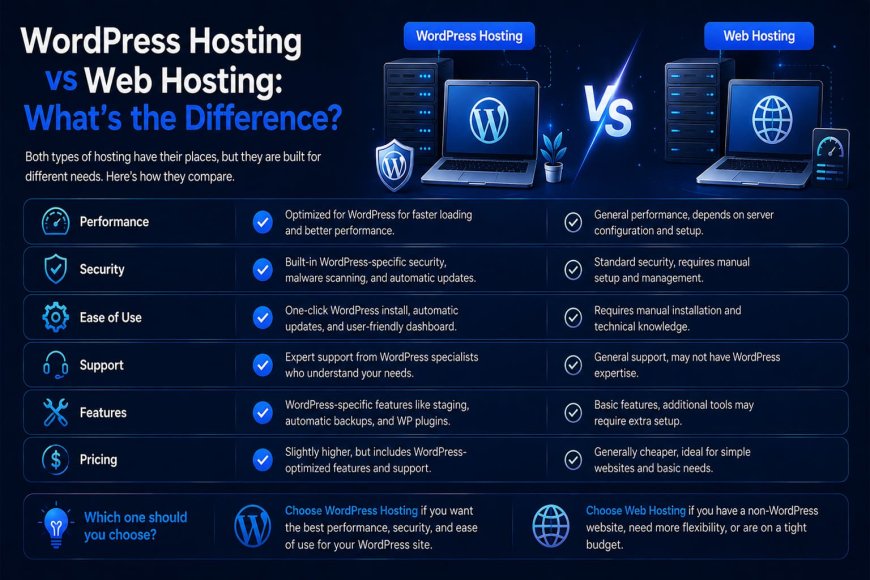
What Is the Difference Between Regular Web Hosting and WordPress Hosting?
The main difference between WordPress Hosting and regular Web Hosting lies in the level of customization and optimization they provide. Regular web hosting gives you space on a server that can be used to create and run different types of websites, whether they are built with WordPress, another Content Management System (CMS), or a different programming framework.
WordPress Hosting, on the other hand, is specifically configured to meet the requirements of WordPress. It typically comes with optimized settings, tools, and technologies that help WordPress run more efficiently. As a result, it can make website management easier while improving performance, speed, and security.
To put it simply, you can think of WordPress as a powerful car engine, while WordPress Hosting is the right type of fuel for that engine. Just as an engine needs suitable fuel to operate at its best, WordPress benefits from a hosting environment specifically optimized for its requirements, helping it run faster and more reliably while providing a better experience for visitors.
What Are the Benefits of WordPress Hosting?
- High Speed and Performance: WordPress hosting is specifically optimized to deliver the best possible performance for WordPress websites. It typically includes technologies such as caching and speed optimization tools that help reduce page load times and improve the visitor experience. Server configurations and resources are also optimized to meet WordPress requirements, helping websites run faster and more reliably.
- Advanced Security: WordPress hosting provides dedicated security features designed to protect websites running on WordPress. These may include firewalls and security filters that help protect against attacks and malware targeting WordPress websites. Many hosting providers also offer free SSL certificates and regular security updates to help protect your website and user data.
- Ease of Use and Time Savings: One of the main benefits of WordPress hosting is that it makes website creation and management easier. Many providers offer one-click WordPress installation, allowing you to set up a website without requiring advanced technical knowledge.
- Specialized Technical Support: Technical support for WordPress hosting differs from that of standard hosting services. Support teams are generally more experienced with WordPress-related issues, including plugin and theme errors, compatibility problems, and performance issues. This can help you resolve technical problems more quickly.
- Automatic Backups: Most WordPress hosting providers offer automatic backups for website files and databases. This allows you to easily restore your website in the event of an error, technical issue, or data loss.
- Easy Scalability and Website Management: As your website grows and attracts more visitors, some WordPress hosting providers allow you to upgrade your resources easily. They may also provide tools for managing your website and monitoring its performance from a single dashboard.
- Safe Staging Environment: Some WordPress hosting providers offer a staging environment, which allows you to test changes, updates, or new plugins on a separate copy of your website before applying them to the live site. This can help prevent potential issues from affecting your visitors.
Disadvantages of WordPress Hosting
Despite the many benefits of WordPress hosting and the convenience it provides when managing the technical aspects of a website, it also comes with some disadvantages and challenges that should be considered before choosing a hosting plan. The main disadvantages of WordPress hosting include the following:
- Higher Cost Compared to Traditional Hosting: WordPress hosting relies on optimized resources, advanced security configurations, high-performance caching technologies, and specialized technical support. As a result, it can be more expensive than traditional shared hosting. Costs can increase significantly when choosing Managed WordPress Hosting or dedicated server solutions.
- Restrictions on Certain Plugins: Some managed WordPress hosting providers restrict the use of certain WordPress plugins, particularly plugins that may negatively affect server performance or conflict with the provider's built-in services. For example, a hosting company may prohibit certain caching plugins because it already uses its own caching system, or restrict some backup plugins to reduce server resource consumption.
- Difficulty Migrating to Another Hosting Provider: Some WordPress hosting services rely on custom technical infrastructure and provider-specific optimizations. This can make it more complicated to migrate your website to another hosting company, especially when the new hosting environment has different configurations. The migration process may require technical expertise to avoid issues involving website files, databases, or URLs.
- Not Suitable for Non-WordPress Websites: WordPress hosting is specifically designed to run and optimize WordPress websites. Therefore, it may not be suitable for projects built using other frameworks or platforms, such as Laravel, Django, Magento, or OpenCart. In such cases, you may not benefit from the features provided by WordPress hosting, and the hosting environment may not meet your project's requirements.
- Resource and Traffic Limits on Some Plans: Some WordPress hosting providers impose limits on monthly website visits, server resources such as CPU and RAM usage, or the number of concurrent processes. If you exceed these limits, your website performance may decrease, you may be charged additional fees, or you may need to upgrade to a higher-tier hosting plan. This can increase your operating costs as your website grows.
Ultimately, these disadvantages do not mean that WordPress hosting is a poor choice. In fact, it is one of the best hosting options for WordPress websites, especially if you are looking for high performance, easy website management, and strong security. However, the right choice depends on your website's requirements, budget, and the nature of your project.
For this reason, make sure to compare hosting providers and plans carefully, and verify that the features and services they offer justify the additional cost before subscribing. Now that we have covered the advantages and disadvantages of WordPress hosting, it is time to explore the different types of WordPress hosting and the key differences between them to help you choose the option that best suits your needs.
What Are the Different Types of WordPress Hosting?
There are several types of WordPress hosting designed to meet the different needs and budgets of websites, much like commercial and residential properties vary depending on the size and requirements of a project. The main types of WordPress hosting can be divided into the following:
1. Shared WordPress Hosting
Shared WordPress hosting is one of the most popular types of web hosting. In this type of hosting, multiple websites are hosted on a single server and share the server's core resources, such as CPU, RAM, storage space, and bandwidth.
Shared hosting can be compared to living in a residential building, where each website has its own private space but shares the same building with other residents. Similarly, websites hosted on the same server share its available resources and capabilities.
One of the main advantages of shared WordPress hosting is its low cost and ease of use, making it a suitable option for new websites, blogs, and small businesses. However, sharing server resources can result in certain limitations, including performance issues caused by other websites.
For example, if one of the websites hosted on the same server receives a large number of visitors or consumes a significant amount of CPU and RAM, it may affect the performance of your website and cause temporary slowdowns or longer page loading times.
2. Managed WordPress Hosting
Managed WordPress hosting is a specialized hosting service specifically designed to run WordPress websites with a high level of performance, security, and reliability. With this type of hosting, you do not simply receive storage space and server resources. Instead, the hosting provider takes care of many technical and administrative tasks on your behalf, such as managing updates, monitoring performance, creating backups, and implementing security measures.
This allows you to focus on creating content and growing your website instead of spending your time dealing with technical tasks.
Managed WordPress hosting can be compared to living in a luxury residential complex that provides comprehensive services, with a dedicated team responsible for maintenance, security, and ongoing monitoring. In the same way, the hosting provider manages the technical aspects of your website, from improving its speed and performance to troubleshooting technical issues when they occur.
Managed WordPress hosting is a suitable option for WooCommerce online stores, large websites that require high performance and reliability, as well as businesses and website owners who rely on their websites to generate revenue but do not have the time or technical expertise to manage the technical side of their websites.
However, these additional features and services usually come at a higher cost than shared hosting. As a result, managed WordPress hosting may not be the best choice for small or beginner websites that do not require advanced hosting capabilities.
3. WordPress VPS Hosting
WordPress VPS hosting is an advanced hosting solution designed for WordPress websites that require more resources and higher performance. With VPS hosting, a single physical server is divided into multiple independent virtual servers using virtualization technologies. Each website is provided with its own virtual environment and dedicated resources.
These resources typically include RAM, CPU, and SSD storage, which are allocated to your website rather than being shared directly with other websites. This helps provide more consistent speed and performance because your website is less likely to be affected by increased traffic or resource usage on other websites hosted on the same physical server.
VPS hosting also provides virtual isolation between websites, which can improve security and reduce the risk of security issues or malware affecting your website from other websites on the same physical server.
WordPress VPS hosting is suitable for websites that require higher performance and dedicated resources compared to shared hosting. This includes websites with high levels of traffic, online stores that require speed and stability, and websites with large databases or numerous resource-intensive plugins.
VPS hosting can also be a good option for businesses and projects that require a more flexible and customizable hosting environment, as well as website owners who have technical expertise or a dedicated team capable of managing the server and its configurations.
4. WordPress Dedicated Hosting
WordPress dedicated hosting is one of the most powerful and resource-intensive hosting solutions available for websites. With dedicated hosting, you get an entire physical server exclusively for your website or group of WordPress websites, without sharing any of its resources with other users.
This type of hosting can be compared to owning an entire private mansion, where all the space, services, and resources are available exclusively to you without other users sharing your resources.
One of the main advantages of WordPress dedicated hosting is its extremely high performance. All server resources, including CPU, RAM, and storage, are dedicated to your website. This allows the server to handle large numbers of visitors and simultaneous requests while maintaining high website speed and stability.
Dedicated hosting also gives you extensive control over the server through features such as Root Access. This allows you to modify server configurations, install the software you need, and customize the hosting environment according to your website's specific requirements with relatively few restrictions.
In addition, dedicated hosting provides a high level of security and privacy because there are no other websites hosted on the same physical server. This reduces the risk of security problems originating from neighboring websites.
WordPress dedicated hosting is suitable for large e-commerce stores with thousands of products and a high volume of simultaneous transactions. It is also suitable for major newspapers and news platforms that experience high and sudden traffic spikes, as well as educational platforms and online communities with large numbers of active users.
Despite its powerful capabilities and advanced features, dedicated WordPress hosting is one of the most expensive types of hosting. It also requires a high level of technical expertise or a specialized team to manage, maintain, and continuously optimize the server and its configurations.
After exploring the different types of WordPress hosting, the next important step is to learn how to choose the right type based on your website's specific needs and requirements.
How to Choose the Right WordPress Hosting for Your Website
1. New or Small Website → Shared WordPress Hosting
Shared WordPress hosting is a suitable option if you are a beginner, have a personal blog, run a small business website, or operate a new online store. It offers low costs, easy management, and does not require advanced technical knowledge.
2. Business Website or Medium-Sized Online Store → Managed WordPress Hosting
Managed WordPress hosting is a good choice if you are looking for better performance and easier website management without having to deal with technical tasks yourself. It typically offers advanced security, automatic backups, automatic updates, and specialized WordPress technical support.
3. Growing Website or Website Requiring More Resources and Control → WordPress VPS Hosting
WordPress VPS hosting is suitable if your website is experiencing continuous growth and requires better performance than shared hosting can provide. It offers more stable resources, greater flexibility, and extensive control over server settings and configurations.
4. Very Large Projects or High-Traffic Platforms → WordPress Dedicated Hosting
Dedicated WordPress hosting is suitable if you manage a large-scale website, a major e-commerce store, or a platform that requires the highest levels of performance. It provides an entire physical server dedicated to your website, giving you maximum power, resources, and control.
Summary
Choosing the right WordPress hosting depends on your website's nature, requirements, and expected growth. If you are just starting out and have a small website, shared hosting can be a suitable option because of its affordability and ease of use.
If you want better performance without having to manage the technical aspects of your website yourself, managed WordPress hosting may be the best choice. If your website is growing and requires more resources and greater control, WordPress VPS hosting can provide the flexibility and performance you need.
For large-scale projects that require maximum power, stability, and resources, dedicated WordPress hosting can be the ideal solution.
Key Factors to Consider When Choosing WordPress Hosting
After learning about the different types of WordPress hosting, the next step is choosing the right hosting solution for your website. This decision should not be based on price alone. Instead, you should consider several important factors, including performance, security, ease of management, technical support, and the ability to scale in the future.
The following are the most important criteria to consider when choosing WordPress hosting that meets your website's needs and provides reliable performance and stability.
- Server Speed and Performance: Website speed is one of the most important factors affecting user experience and search engine rankings. Therefore, look for a hosting provider that offers fast servers and modern technologies such as caching, SSD or NVMe storage, and Content Delivery Networks (CDNs).
- Security and Protection: Your WordPress hosting provider should offer strong security features, such as free SSL certificates, protection against cyberattacks, firewalls, continuous server monitoring, and regular backups. These features can help protect your website and ensure that you can restore it if a technical or security issue occurs.
- Hosting Resources and Scalability: Choose a hosting plan that provides sufficient resources for your website's current size and traffic while allowing you to upgrade as your visitor numbers increase or your project expands. The hosting plan that works for you today should not become a limitation on your website's growth in the future.
- Quality of Technical Support: Having a responsive and knowledgeable support team is essential, especially when technical problems affect your website's availability or performance. Ideally, choose a hosting provider that offers 24/7 support and has specific experience with WordPress rather than only handling general server-related issues.
- Ease of Management and Use: If you are a beginner, it is better to choose a hosting service with an easy-to-use control panel, clear management tools, and a simple WordPress installation process. Useful features such as backup management, file management, and database management should also be accessible without unnecessary complexity.
- Price and Value for Money: Do not make price the only factor when choosing WordPress hosting. Selecting the cheapest hosting plan may lead to performance, security, or technical support issues later. Instead, compare what each hosting provider offers in terms of server resources, security, support, performance, and additional features before making your decision.
- Hosting Provider Reputation and Customer Reviews: Before signing up, it is useful to check customer reviews and real user experiences. Pay attention to the provider's service reliability, uptime, customer support quality, and overall reputation. Choosing a reliable hosting company can help you avoid many potential problems in the future.
In short, the best WordPress hosting is not necessarily the most expensive option. Instead, it is the hosting solution that provides the right balance of performance, security, support, resources, and scalability based on your website's current needs and future growth plans.
Conclusion
By the end of this guide, you should now have a comprehensive understanding of WordPress hosting, starting with what WordPress is and how WordPress hosting works, followed by the differences between WordPress hosting and traditional hosting, as well as the main advantages, disadvantages, and types of WordPress hosting available.
As we have seen, choosing the right WordPress hosting is not simply about choosing a hosting company based on its brand name or the price of its plans. Instead, your decision should be based on the nature and size of your website, its expected traffic, and your technical requirements.
Small websites may find shared hosting to be a suitable option, while growing websites may require more powerful solutions such as managed WordPress hosting or VPS hosting. Large-scale projects, on the other hand, may require dedicated servers to achieve the highest levels of performance, stability, and control.
Ultimately, the goal of choosing a good WordPress hosting provider is to have a website that is fast, secure, and reliable, while also providing enough flexibility to scale and grow in the future.
Therefore, make sure to choose a WordPress hosting solution that meets your current needs while providing the flexibility and resources required to support your website as it develops and grows over time.